Cart
0
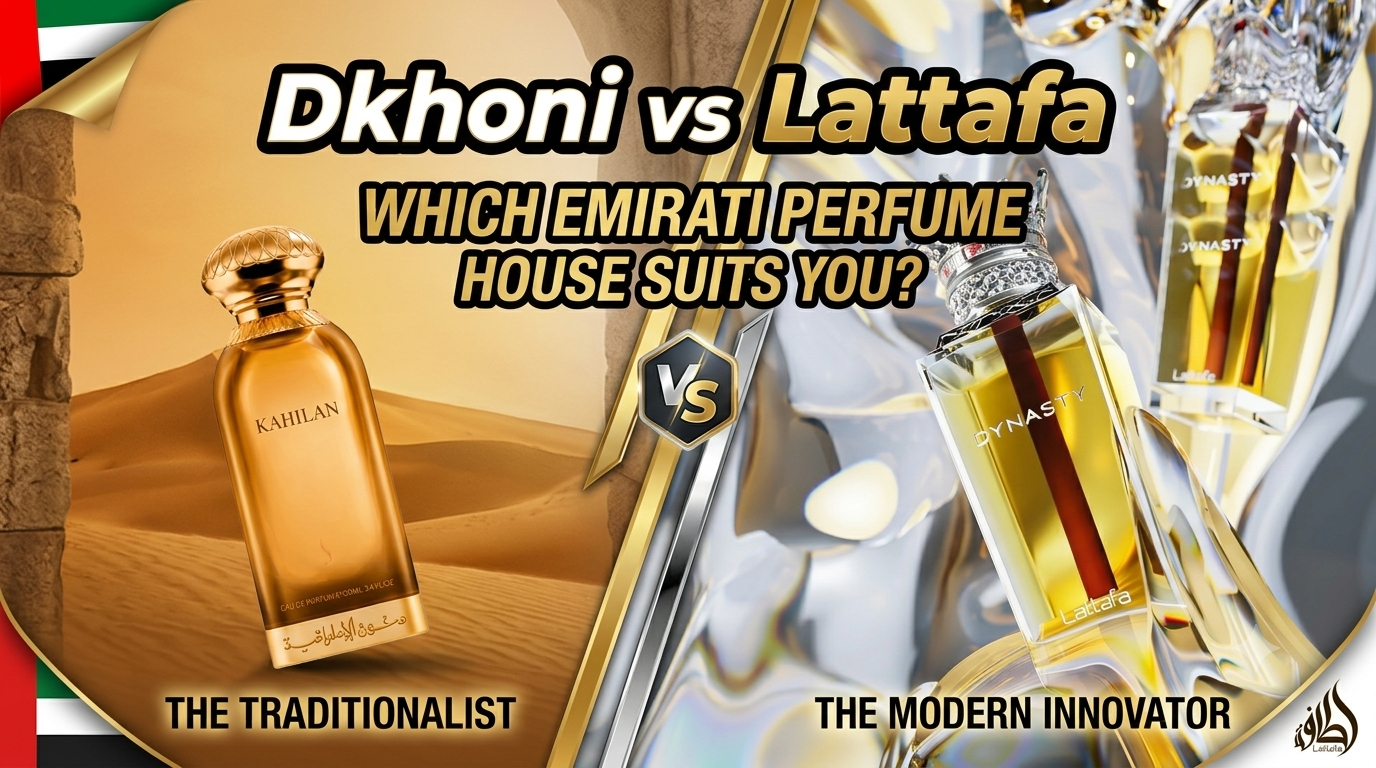
Ask any Arabian-perfume shopper to name two brands and there's a good chance Lattafa comes up first — it's the house behind the TikTok-viral Khamrah and Asad. Dkhoni is quieter but no less serious about what it does. Both are Dubai-founded, both work heavily in oud, amber, and musk, and both are genuinely worth owning. The question isn't which one is "better" — it's which one matches how you actually want to wear scent.
The Quick Answer
If you want a fragrance that makes an entrance — bold projection, unmistakably "loud," built to be talked about — Lattafa's catalogue leans that way, especially its viral, designer-inspired releases. If you want something that reads as more considered and versatile, with a tighter range built around oud, amber, and a distinctive dukhoon (incense-inspired) line, Dkhoni is the better starting point. Plenty of people end up owning both, for different days.
Brand Origins
Lattafa was founded in Dubai in 1980 by Sheikh Shahid Ahmad and Shoaib Iqbal, and the name itself comes from the Arabic words latif ("gentle") and lateefa ("pleasant"). It started as a small regional perfumer and, over four decades and three generations of family ownership, grew into one of the biggest Arabian fragrance exporters in the world, now selling in well over 100 countries. Its breakout global moment came in the early 2020s, when releases like Khamrah and Asad went viral for offering a strong resemblance to expensive niche and designer scents at a fraction of the price.
Dkhoni is a newer, smaller house, established in 2015 and also known internationally as Dkhoon Al Emiratia. Rather than chasing viral, designer-adjacent releases, it has stayed focused on a narrower catalogue built around traditional Gulf accords — oud, amber, musk — plus a signature line named after dukhoon, the Arabic tradition of incense and bakhoor, even though the products themselves are perfumes rather than incense. Its distribution footprint (UAE, Kuwait, Bahrain, Oman, Jordan, and a growing UK presence) is smaller than Lattafa's, which is part of why it's less of a household name — not a reflection of quality.
Scent Style: What Each Brand Actually Smells Like
This is where the two houses diverge most clearly.
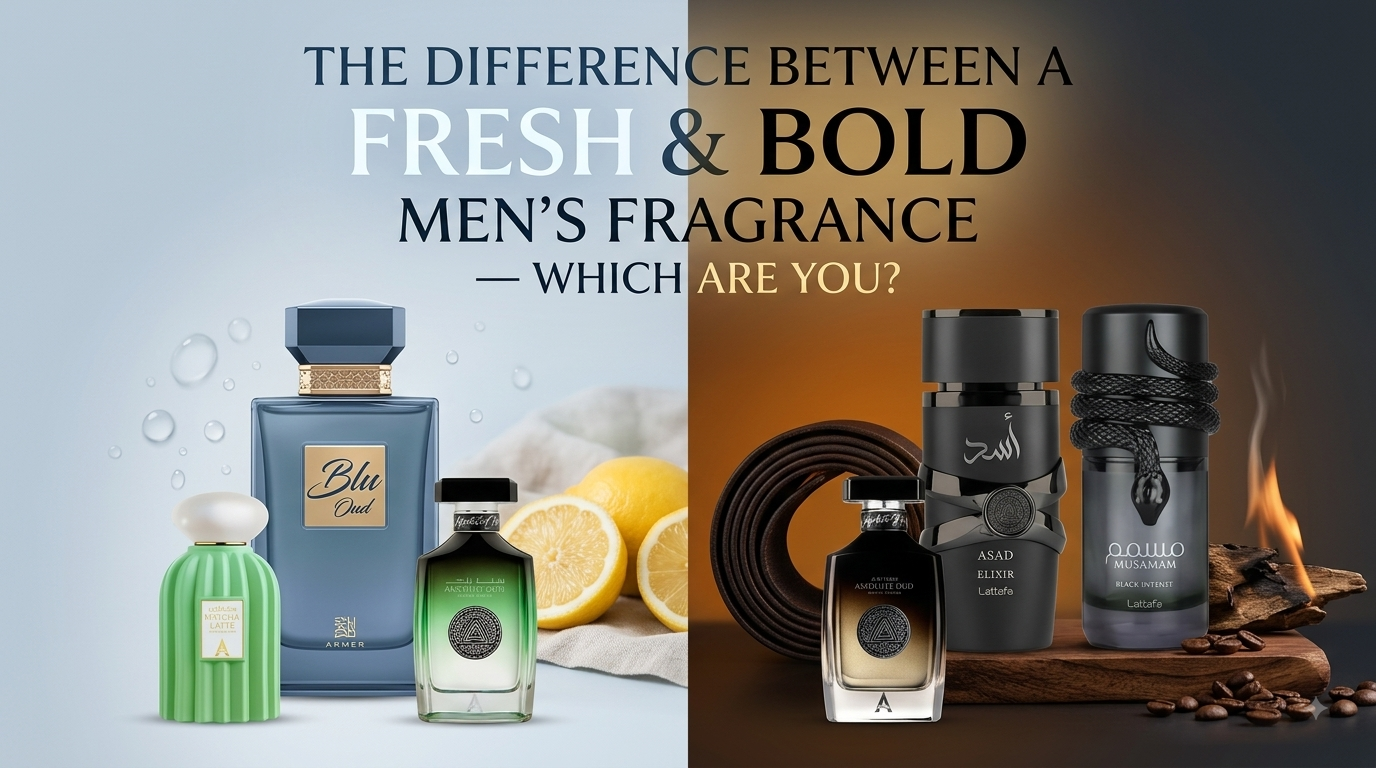
Lattafa's range is broad and split across dozens of sub-lines, from gourmand (Khamrah) to fresh and woody (Asad) to classic oud attars. Its most talked-about releases tend to be intentionally close in spirit to well-known designer and niche fragrances, reworked with Lattafa's own materials and pricing. Performance is a big part of the brand's reputation — strong projection and long wear are consistent themes across reviews.
Dkhoni's catalogue is more tightly organised into a handful of families: oud-and-amber blends for depth, softer musk scents for daily wear, the incense-inspired dukhoon line, and lighter floral or gourmand releases for a broader audience. It doesn't lean on "smells like [designer scent]" marketing — its identity is built around interpreting traditional Gulf perfumery in its own way, at everyday prices.
If you already know you want "a scent that smells like a specific expensive perfume, for less," Lattafa's viral hits are built for that search. If you want to explore what Middle Eastern perfumery is on its own terms, Dkhoni is arguably the more direct route in.
Bestsellers Worth Knowing
From Lattafa: Khamrah (spiced gourmand), Asad (woody-fresh), Yara (fruity-floral), Oud Mood, and Raghba are the names that come up most often in reviews and social media.
From Dkhoni: Signature Rose Gold (saffron, rose, vanilla) is a strong entry point if you want warmth without heaviness. Dkhoon Amber is the closest thing to a "classic" Dkhoni scent — amber, musk, and a touch of oud. Master is the brand's bolder, more traditionally masculine oud-and-amber composition, and Tiamo is a softer floral-amber alternative for everyday wear.
Price and Value
Both brands compete in the same "affordable luxury" bracket relative to designer and niche perfumery — you're generally looking at a fraction of what an equivalent niche house would charge, in both cases. Lattafa's pricing varies more by line, since its catalogue spans budget-friendly attars through to more premium collections. Dkhoni's range is more consistently positioned in the mid-range for this category, without the very top-tier "prestige" sub-lines Lattafa has introduced as it's grown.
Longevity and Projection
Both houses are known for above-average performance compared with mainstream Western perfumery, which is part of the wider appeal of Gulf perfume brands generally. Within their own ranges, the pattern is similar for both: oud- and amber-based compositions (Dkhoon Amber, Master, Oud Mood) tend to project the most and last longest — often 6–8 hours or more — while lighter musk, fresh, and floral releases sit closer to the skin and need reapplying sooner. Neither brand is a safe bet if you want something quiet and barely-there; both are built for noticeable wear.
Which One Should You Choose?
- New to Arabian perfumery and want a gentler introduction? Start with Dkhoni — the range is smaller and easier to navigate, and nothing in it is built to overwhelm.
- Chasing a specific "smells like [designer scent], but affordable" recommendation you saw online? Lattafa's viral releases are usually the ones people mean.
- Want a distinctive incense-inspired scent that isn't trying to copy anything else? Dkhoni's dukhoon line is the more original choice.
- Buying as a gift and want brand recognition? Lattafa's name recognition, especially post-Khamrah, makes it the safer gift pick for someone who already follows fragrance trends.
- Building a small "everyday Arabian perfume" wardrobe rather than one showpiece bottle? Dkhoni's tighter, more curated catalogue is easier to shop end-to-end without decision fatigue.
Frequently Asked Questions
Is Dkhoni the same as Lattafa? No. They're separate, independently owned houses — Dkhoni (also known as Dkhoon Al Emiratia) was founded in 2015, while Lattafa dates back to 1980. Both are Dubai/UAE-founded and both work extensively in oud and amber, which is why they're often compared.
Which lasts longer, Dkhoni or Lattafa? Within both ranges, oud- and amber-heavy compositions last longest (often 6–8+ hours), while lighter musk and floral releases wear off sooner. Neither brand is consistently longer-lasting than the other overall — it depends on which specific scent you're comparing.
Is Lattafa better than Dkhoni? Neither is objectively better — they suit different priorities. Lattafa is the bigger, more recognised name with viral, designer-inspired releases. Dkhoni is a smaller, more focused house built around traditional Gulf accords rather than comparisons to other brands.
Can I wear Dkhoni and Lattafa together, or should I pick one brand? There's no reason to commit to one house. Many fragrance collections mix brands freely — pick individual scents that suit the occasion rather than choosing a single "team."
Final Thoughts
Lattafa and Dkhoni both prove the same point from different directions: you don't need a three-figure price tag to wear serious Arabian perfumery. Lattafa gets there through scale, social proof, and a strategy built on viral, designer-adjacent releases. Dkhoni gets there through a smaller, more deliberate catalogue rooted in traditional oud, amber, and dukhoon-inspired scents. If you're still deciding, browse Dkhoni's oud and amber range and see which of its four core families — oud, amber, musk, or floral — matches what you're actually looking for.