Cart
0
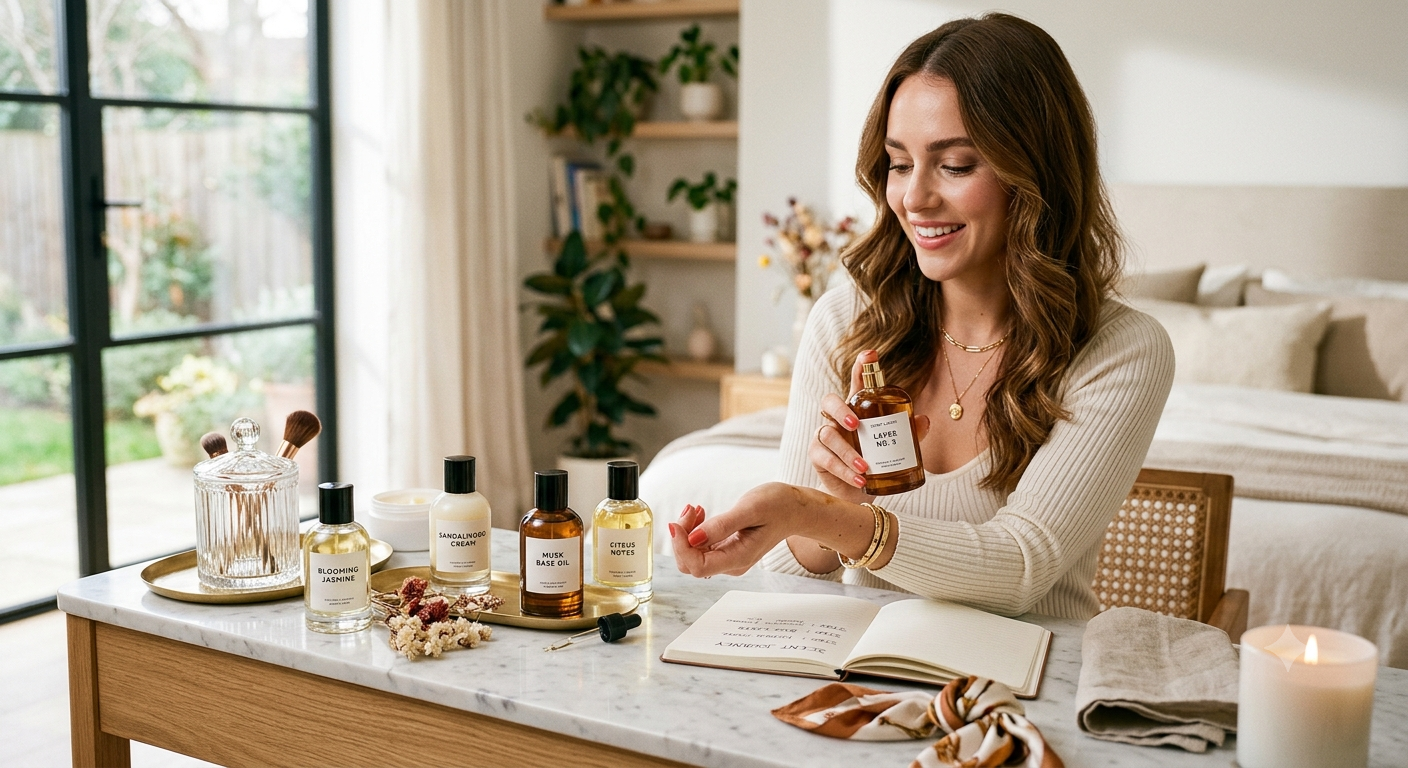
Have you ever sprayed your favourite perfume in the morning only to notice it has almost disappeared by lunchtime?
You're not alone. Fragrance longevity depends on far more than the quality of your perfume. Your skin type, application technique, storage, and even the weather all influence how long your scent lasts.
The good news? You don't need to apply more perfume. You simply need to apply it smarter.
In this guide, we'll explain how perfume layering works, why it helps fragrances last longer, and how you can build a scent routine that keeps you smelling amazing from morning until night. These methods are widely recommended by fragrance experts and consistently improve both longevity and overall scent performance.
What Is Perfume Layering?
Perfume layering is the process of combining complementary scented products—or occasionally compatible fragrances—to create a richer, longer-lasting scent experience.
Layering can include:
- Unscented or lightly scented body lotion
- Body oil
- Matching shower gel
- Perfume oil
- Eau de Parfum
- Hair mist (if suitable)
Rather than masking your fragrance, each layer creates a foundation that slows evaporation and helps the scent develop more naturally throughout the day.
Why Does Perfume Fade So Quickly?
Many people assume their perfume is poor quality when it fades quickly. In reality, several factors affect longevity:
- Dry skin absorbs fragrance faster.
- Hot weather speeds up evaporation.
- Applying perfume incorrectly reduces performance.
- Rubbing wrists together damages delicate top notes.
- Low fragrance concentration naturally wears off sooner.
Hydrated skin and proper application often make a bigger difference than simply spraying more perfume.
Step 1: Start with Moisturised Skin
This is the most overlooked step.
Perfume adheres much better to moisturised skin than dry skin.
After showering:
- Apply an unscented body lotion.
- Let it absorb for a few minutes.
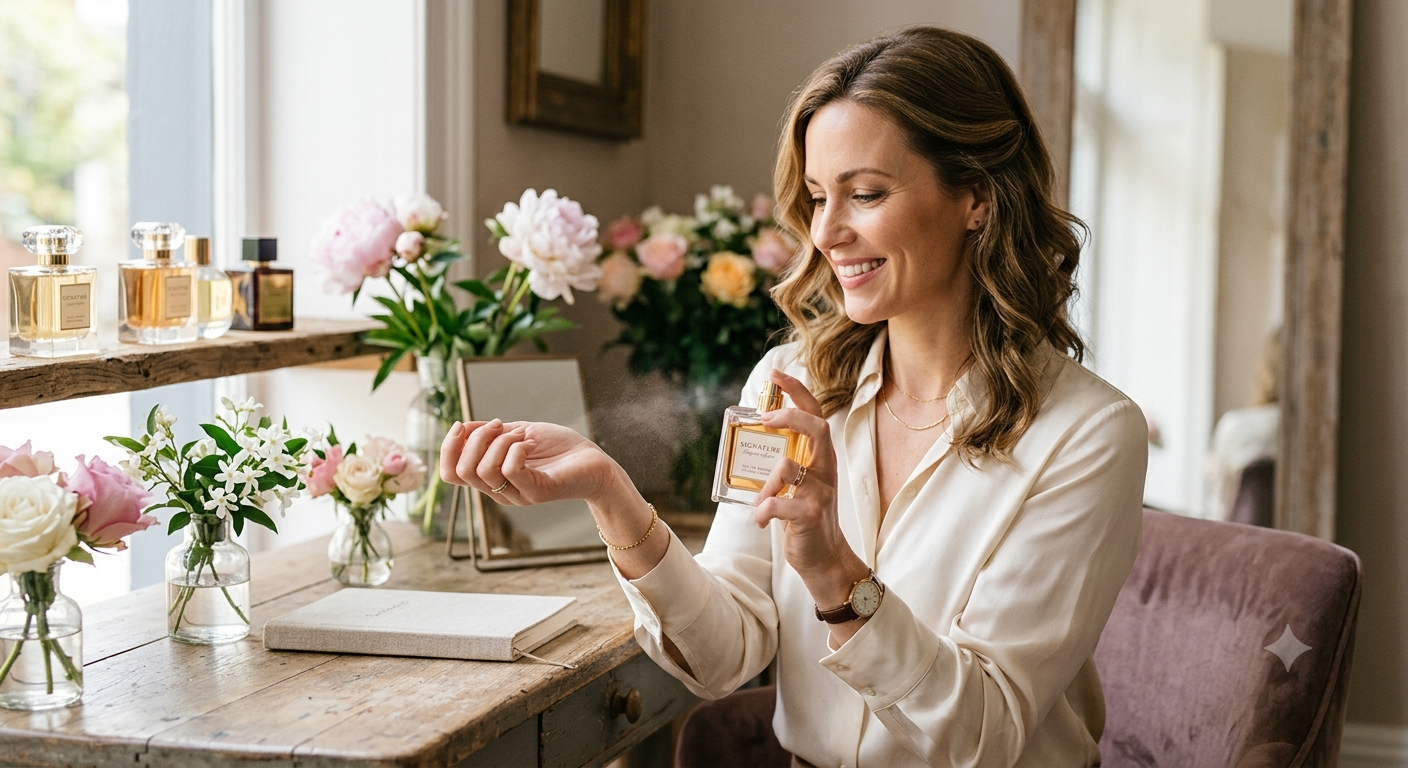
- Spray your fragrance afterwards.
If your skin is particularly dry, a small amount of body oil or petroleum jelly on pulse points can help extend wear even further.
Step 2: Apply Perfume to Pulse Points
Pulse points generate natural body heat, allowing fragrance to diffuse gradually throughout the day.
The best places include:
- Neck
- Behind the ears
- Wrists
- Inner elbows
- Behind the knees
You don't need to spray every location. Two or three well-chosen pulse points are usually enough.
Step 3: Never Rub Your Wrists Together
It's one of the biggest fragrance myths.
Rubbing your wrists creates friction and heat that can alter the opening notes of a fragrance.
Instead:
- Spray once.
- Allow it to dry naturally.
- Let the fragrance evolve on its own.
Step 4: Layer Similar Fragrance Families
Layering works best when scents share complementary notes.
Here are a few combinations that fragrance lovers often enjoy:
| Base Scent | Layer With |
|---|---|
| Vanilla | Amber or Oud |
| Rose | Musk |
| Citrus | White Floral |
| Sandalwood | Vanilla |
| Oud | Amber |
Avoid mixing too many fragrances at once. Two complementary scents are usually enough to create a balanced signature fragrance.
Step 5: Choose the Right Perfume Concentration
Different fragrance types naturally last for different lengths of time.
| Fragrance Type | Typical Longevity |
|---|---|
| Eau de Cologne | 2–3 hours |
| Eau de Toilette | 3–5 hours |
| Eau de Parfum | 6–10 hours |
| Parfum | 8–12+ hours |
If longevity is your priority, Eau de Parfum or Parfum concentrations are generally the better choice.
Step 6: Spray Clothes Carefully
Fabric often holds fragrance longer than skin.
Lightly mist:
- Scarves
- Jackets
- Shirts
However, always test delicate fabrics first, as some perfumes may stain silk, satin, or light-coloured clothing.
Step 7: Store Your Perfume Properly
Heat, sunlight, and humidity slowly break down fragrance ingredients.
For best results:
- Keep bottles in a cool, dry place.
- Store them away from direct sunlight.
- Avoid leaving perfumes in bathrooms or on windowsills.
Proper storage helps preserve the fragrance profile for much longer.
Common Perfume Layering Mistakes
Avoid these common errors:
- Applying perfume to dry skin
- Spraying too much
- Rubbing wrists together
- Mixing several strong fragrances
- Using conflicting fragrance families
- Storing bottles in hot environments
A simple routine is often more effective than an overly complicated one.
Build Your Own Signature Scent
One of the biggest benefits of layering is creating a fragrance that's uniquely yours.
For example:
- A warm vanilla base paired with a soft floral perfume creates a comforting everyday scent.
- Oud layered with amber adds depth for evening wear.
- Citrus combined with musk feels fresh and sophisticated during warmer months.
Experiment gradually until you discover combinations that suit your personality and the occasion.
Explore Luxury Fragrances at Midnight Essence
Whether you love rich oud, elegant florals, fresh citrus, or warm gourmand fragrances, building a fragrance wardrobe makes layering much easier.
At Midnight Essence, you'll find an expertly curated collection of luxury Arabic and designer-inspired perfumes that are perfect for creating your own signature scent.
Explore different fragrance families, discover complementary notes, and experiment with layering to enjoy a scent that lasts from your morning routine to your evening plans.
Final Thoughts
Making your perfume last longer isn't about using more fragrance—it's about using it correctly.
By moisturising your skin, applying perfume to pulse points, layering complementary scents, and storing your bottles properly, you can significantly improve both longevity and projection.
Small changes to your fragrance routine can make every bottle perform better and help you enjoy your favourite scents throughout the day.